A Worrying Trend

Over the past two decades, the incidence of colorectal cancer (CRC) among younger adults has risen sharply. In many countries, diagnosis in people under 50 has approximately doubled. [ The Guardian + Cancer.gov + CNIO] While classic risk factors such as diet, lifestyle, obesity, and screening gaps remain relevant, scientists have also zeroed in on a novel culprit: a bacterial toxin.
Meet Colibactin: A Hidden Gut Risk

A recent landmark study found that certain strains of E. coli produce a toxin known as colibactin, capable of directly damaging DNA in colon cells. [ UC San Diego Today + Reuters] The research demonstrated that people diagnosed with colorectal cancer before age 40 had the colibactin-related DNA signatures 3.3 times more often than those diagnosed after 70. [Reuters]
This discovery suggests the possibility that early-life exposure (even in childhood) to colibactin-producing E. coli could “get a head start” for cancer risk decades later. [Cancer Therapy Advisor] While the causal chain is not fully proven, the evidence is compelling: a gut microbial factor that previously flew under the radar may be driving part of the early-onset CRC wave.
How the Gut Microbiome, Toxins & Diet Intersect
According to the study, colonization by pks⁺ E. coli (the type that produce colibactin) may happen early in life and then fade, but the mutational damage they leave behind persists. [Wellcome Sanger Institute] Moreover, diet and gut-environment factors shape how these bacteria colonize and how much damage they cause. Low-fibre diets, childhood antibiotic exposure, and gut inflammation, all common in modern lifestyles, may create a permissive environment for colibactin risk. [The Washington Post]
In short: the gut microbiome matters. But if we can’t yet fully control bacterial toxin exposure, might we instead strengthen our defenses?
Enter Kola Nut: Natural Antimicrobials from the Rainforest

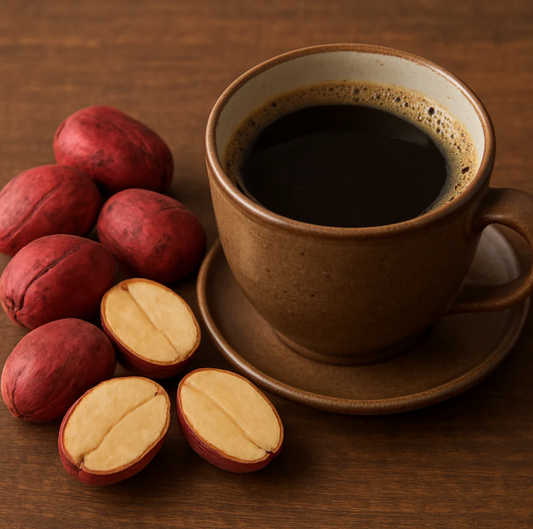
Traditional medicine and modern phytochemistry converge on the kola nut (Cola acuminata), a caffeine and theobromine-rich seed long valued in West Africa for its stimulating and medicinal properties. Scientific studies show that extracts of C. acuminata exhibit selective antimicrobial activity, strongly inhibiting certain Gram-positive bacteria such as Staphylococcus aureus and Bacillus subtilis, while exerting only modest, concentration-dependent effects on Gram-negative species like Escherichia coli.
- A 2011 study reported that methanolic and aqueous extracts of C. acuminata produced clear inhibitory zones against S. aureus and Candida albicans, but little measurable effect on E. coli or Pseudomonas aeruginosa, indicating a selective antimicrobial profile. [ effect of Cola acuminata on bacteria]
- A 2019 investigation found that the acetone extract (Biz-3w fraction) of C. acuminata exhibited potent antibacterial activity against S. aureus and B. subtilis (MIC ≈ 14–16 µg/mL) and weaker inhibition of E. coli at higher concentrations (≈ 30–50 µg/mL). [ antibacterial properties of Cola acuminata]
Although C. acuminata shows limited direct suppression of E. coli growth, emerging research on plant-derived polyphenols and alkaloids suggests another mechanism: these compounds can inhibit bacterial quorum sensing, the communication system bacteria use to coordinate toxin production and virulence. Polyphenols and tannins like those in kola nut have been shown in related studies to disrupt toxin-gene expression in E. coli and other Enterobacteriaceae, reducing their harmful effects without eradicating beneficial gut microbes.
How Trivetum Naturals Leverages Kola Nut
- We use an innovative, gentle processing method that preserves kola nut’s key bioactive compounds, alkaloids and polyphenols such as kolatinine, theobromine, and caffeine, maintaining their natural potency and functional integrity.
- Our process avoids excessive heat, solvents, or synthetic additives, so the antimicrobial and antioxidant potential of the nut remain intact.
- We combine kola nut with roasted barley (rich in beta glucan prebiotic fiber) and complementary botanicals to deliver smooth, sustained energy and gut-friendly benefits, without jitters or crash.
- While we make no disease claims, we highlight supporting research on kola nut’s microbial-modulating properties and its potential role in gut health, a foundational system linked to colorectal-cancer risk.